Experts discuss the Indus Waters Treaty, highlighting its engineering aspects and addressing criticisms of unfairness to India.

'India's letter to Pakistan on April 24 (2025; two days after the Pahalgam terrorist attack) didn't tear up the treaty -- but it did put it on ice.'
The Indus system of rivers comprises the main river -- the Indus -- along with its five left bank tributaries, namely, the Ravi, the Beas, the Sutlej, the Jhelum and the Chenab. The right bank tributary, the Kabul, does not flow through India.
Pakistan has written to India seeking information about the Svalkot hydroelectric project on the River Chenab, according to the Foreign Office spokesperson.
The talks as part of the annual Permanent Indus Commission meeting are being held after a gap of over two years.

During the meeting, Pakistan was expected to highlight concerns about the three Indian hydro projects being built on the rivers flowing to Pakistan.

Pakistan has voiced concerns over the alleged variations in the flow of the Chenab River and has written a letter to India seeking clarification. They also commented on an incident in Bihar involving the removal of a Muslim woman's veil.

After threatening to move World Bank over the Kishenganga project, Pakistan is set to rake up with India the issue of two more hydel power units being constructed in Jammu and Kashmir when Indus water commissioners of the two countries meet in New Delhi on May 31.
The outlawed Jamaat-ud-Dawah on Monday described Pakistan's Indus Waters Commissioner Jamaat Ali Shah as an 'Indian agent' after he dismissed the widespread impression that India is 'stealing' Pakistan's share of river waters. Senior JuD leader Abdul Rehman Makki chided Shah and said his statement had weakened the case of 180 million Pakistanis. "He (Shah) is trying to bail out India over the water issue and the people of Pakistan are not convinced," he said.

The talks will be the first official engagement between India and Pakistan since Khan became prime minister on August 18.

"I do not think they (World Bank) are in a position to interpret the treaty for us. It is a treaty between our two countries and our assessment of the treaty is that there is a provision of graded approach," External Affairs Ministry Spokesperson Arindam Bagchi said.
India has issued a notice to Pakistan for modification of the Indus Waters Treaty of September 1960 following Islamabad's "intransigence" on its implementation
Pakistan has responded to a letter by India asking to start negotiations for the review of the Indus Water Treaty, the foreign office said on Wednesday.
The sources said India has always been a steadfast supporter and a responsible partner in implementing the IWT in letter and spirit.
It is the first major contact of its kind since the Pakistan-India conflict in May, the paper said, citing sources.
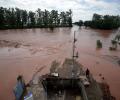
Pakistan has urged India to fully adhere to the Indus Water Treaty (IWT), expressing concerns about the level of detail in flood information shared through diplomatic channels.
The World Bank's move came as it told the two countries that it was responding to their separate proceedings initiated under the Indus Waters Treaty 1960.
"Pakistan will not accept any modifications or changes to the provisions of the Indus Waters Treaty. Our position is based on the principles enshrined in the treaty. And the treaty must be honoured in... letter and spirit," Special Assistant to Prime Minister Tariq Fatemi told Dawn News.
This will be the annual meeting of the Permanent Indus Commission. Under the provisions of the Indus Water Treaty, both the commissioners are required to meet at least once a year alternately in India and Pakistan.

'Much can be done by India under the provisions of the treaty to make full use of its rights it has.' 'The impact of that will be felt downstream.'

Vikas Swarup says India unlikely to give Pathankot-like offer to Pak in Uri attack probe.

Floodwaters from the Ravi River have inundated the Kartarpur Corridor in Pakistan, including Gurdwara Darbar Sahib, stranding over 100 people. Rescue operations are underway as thousands are evacuated from flooded areas.
In a first since the signing of the Indus Water Treaty between the two countries, three female officers will also be part of the Indian delegation, which will be advising the Indian Commissioner on various issues during the meeting, the official said.
Pakistan today pressed India to release its share of river waters under the Indus treaty as it has documentary evidence that its due share of water had been "stolen" from the Chenab river.
Pakistan's Indus Waters commissioner Jamaat Ali Shah informed the media about the roadmap and said both sides had decided to hold two additional meetings one at the end of March and another in June for "dispute resolution". Both meetings will be in addition to the mandatory one scheduled for May, he said.
Both the countries agreed to undertake the Treaty mandated tours of both the Indus Commissioners in the Indus basin on both sides, the ministry said in a statement in New Delhi.
Pakistan has raised objections to the design of India's Kiru hydroelectric plant, a mega 624 MW project over the Chenab river in Jammu and Kashmir, but New Delhi asserts that the project is fully compliant with the Indus Water Treaty, according to officials.
Secretary of Pakistan's ministry of water resources Khawaja Shumail said: "We have neither concern nor objection if India diverts water of eastern rivers and supplies it to its people or uses it for other purposes, as the IWT allows it to do so."
Indian High Commissioner Sharat Sabharwal said on Saturday that reduced flow of river waters into Pakistan are not the result of any "violation of Indus Waters Treaty by India or any action on our part to divert such flows or to use more than our assigned share of water from Western Rivers".
India described Pakistan's allegations of stealing water as "preposterous and completely unwarranted". Pakistan has alleged that India is stealing its share of river waters and waging a water war, saying it is "scrupulously" providing Pakistan its share of water in line with the 1960 Indus Waters Treaty.

Pausing the process for now, the bank would hold off from appointing the Chairman for the Court of Arbitration or the neutral expert -- appointments that had been expected on December 12 as earlier communicated by the bank.
The tour of the Pakistani side was originally scheduled in October 2018 but was postponed because of local bodies elections in Jammu and Kashmir.
'In the last 55 years India and Pakistan have gone to wars, but nobody spoke about scrapping the Indus Waters Treaty.'
'What Modisaab will accomplish by tampering with the treaty is providing ammunition to ultra-nationalist right wing elements within Pakistan who see India as an existential threat.'
The three-day meeting between the two commissioners of PCIW completed discussions on all agenda items on Wednesday.

Since signing of the treaty, a total of 118 such tours on both the sides have been undertaken.
'In the last 55 years India and Pakistan have gone to wars, but nobody spoke about scrapping the Indus Waters Treaty.'
For Ali, who hails from Mendhar sub-division near the Line of Control (LoC) in Poonch district, the uniform is more than a job -- it's a calling. He has dedicated nearly half his life in the police force, serving its various wings with distinction and earning multiple commendations for his courage and unwavering commitment to duty.
India is set to participate in the meeting of the Permanent Indus Commission, scheduled to be held in Lahore in March.

Indus Water Commissioner G Ranganathan has written a letter to his Pakistani counterpart Syed Jamaat Ali Shah inviting him for discussing the issue
 © 2026 Rediff.com - Advertise with us - Disclaimer - Privacy Policy - Sitemap - Feedback - About us - Terms of use - Grievances